

Feb 3, 2021
Digitals Soldiers rules for 2021
Enables early verification that systems work in Joint and Cyber contested environments Test whether systems work well together Test whether systems are resilient to cyber threats Identify issues early when they are less costly to fix Provides access to high-demand, low availability systems Supplements number of live Systems Under Test (SUTs), threats, or “supporting cast” to create a realistic environment Feasible alternative to Live testing in early DT and risk reduction for OT Provides access to cyber ranges Ability to conduct unconstrained but nondestructive cyber activities in representative environments Provides a collaborative engineering environment Gives SMEs an opportunity for collaboration without leaving home station Supports all aspects of testing across the acquisition lifecycle Interoperability, cybersecurity, rapid fielding, DT, OT, etc. Reduce Acquisition Cost, Schedule, and Risk #secretstory #combatives #sof #unitedkingdom #police #mma #aliceglass #leo #organicmedium #edsmanifesto #dcombatives #boxing #bond #america #kravmaga #festivals #muaythai #bjj #countercustody #md #va #knife #bendrader #jsoc #dj #hacking #nordicstyle #mexico #superheroes #edcalderon
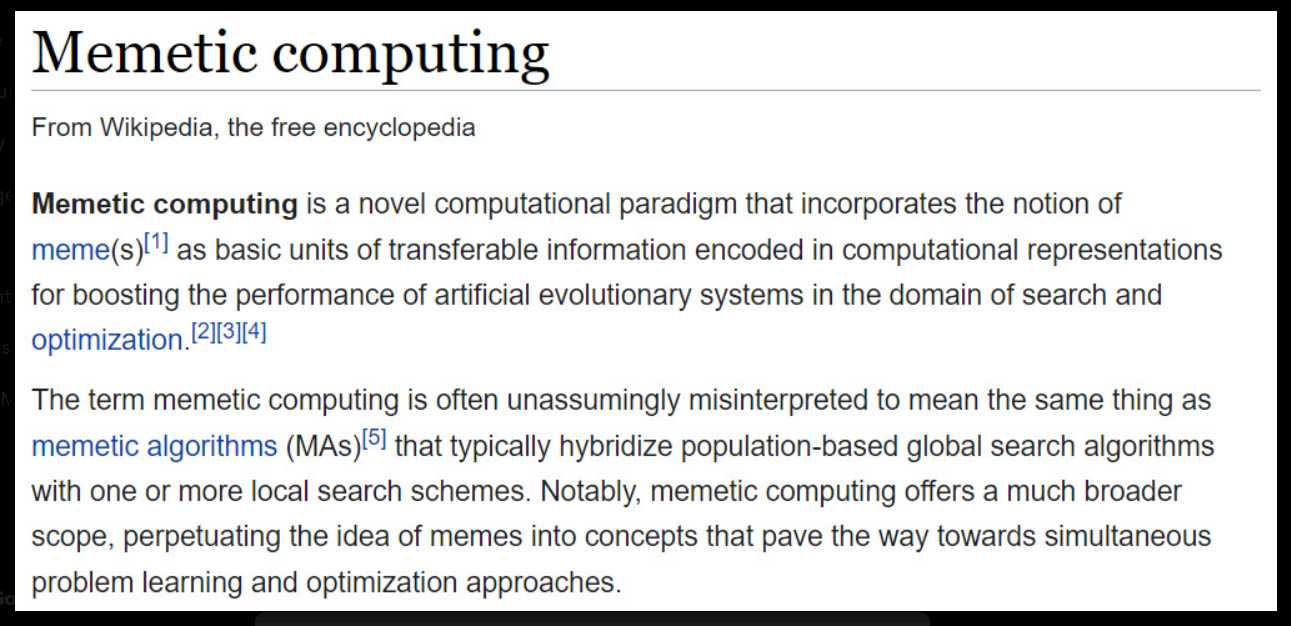
Memetic and kinetic cyberwarfare are terms that describe different aspects of cyber warfare:
1. Memetic Cyberwarfare:
• Memetic warfare is a concept that involves the use of memes, which are not just internet jokes or images but also ideas, symbols, or cultural elements, to influence or manipulate public opinion, social behavior, or perception on a massive scale.
• In the context of cyber warfare, memetic warfare refers to the use of memes, often in the form of online propaganda, disinformation, or psychological operations, to shape public narratives, create division, or achieve strategic objectives.
• This type of warfare focuses on the cognitive and psychological aspects of conflict, aiming to spread particular beliefs or influence how people perceive events, individuals, or organizations.
2. Kinetic Cyberwarfare:
• Kinetic warfare refers to traditional warfare that involves physical actions, such as armed combat, bombings, or other forms of military force. In the context of cyber warfare, “kinetic cyberwarfare” is a term used to describe cyberattacks that have real-world, physical consequences.
• Unlike typical cyberattacks that might aim to steal data or disrupt computer systems, kinetic cyberwarfare attacks target critical infrastructure or systems that can cause physical harm or damage. For example, an attack on a power grid, transportation systems, or industrial control systems (ICS) that results in physical disruptions or harm would be considered kinetic cyberwarfare.
• These attacks blur the line between the cyber and physical realms, as they can have immediate, tangible effects on the physical world.
It’s important to note that both memetic and kinetic cyberwarfare are evolving fields with complex implications. They involve the use of technology and information to achieve strategic objectives, whether through influencing beliefs and perceptions (memetic) or causing physical harm (kinetic) in a digital context.
La cyberguerre mémétique et la cyberguerre cinétique sont des termes qui décrivent différentes facettes de la cyberguerre :
1. Cyberguerre Mémétique :
• La guerre mémétique est un concept qui implique l’utilisation de mèmes, qui ne sont pas seulement des blagues ou des images sur Internet, mais aussi des idées, des symboles ou des éléments culturels, pour influencer ou manipuler l’opinion publique, le comportement social ou la perception à grande échelle.
• Dans le contexte de la cyberguerre, la guerre mémétique fait référence à l’utilisation de mèmes, souvent sous forme de propagande en ligne, de désinformation ou d’opérations psychologiques, pour façonner les récits publics, créer des divisions ou atteindre des objectifs stratégiques.
• Ce type de guerre se concentre sur les aspects cognitifs et psychologiques du conflit, visant à propager des croyances particulières ou à influencer la façon dont les gens perçoivent les événements, les individus ou les organisations.
2. Cyberguerre Cinétique :
• La guerre cinétique fait référence à la guerre traditionnelle qui implique des actions physiques, telles que les combats armés, les bombardements ou d’autres formes de force militaire. Dans le contexte de la cyberguerre, la “cyberguerre cinétique” est un terme utilisé pour décrire des cyberattaques ayant des conséquences réelles et physiques.
• Contrairement aux cyberattaques typiques qui visent à voler des données ou à perturber les systèmes informatiques, les attaques de cyberguerre cinétique ciblent des infrastructures critiques ou des systèmes pouvant causer des dommages ou des préjudices physiques. Par exemple, une attaque contre un réseau électrique, des systèmes de transport ou des systèmes de contrôle industriel (ICS) qui provoque des perturbations ou des préjudices physiques serait considérée comme une cyberguerre cinétique.
• Ces attaques brouillent la frontière entre le cyberespace et le monde physique, car elles peuvent avoir des effets immédiats et tangibles sur le monde réel.
Il est important de noter que la cyberguerre mémétique et la cyberguerre cinétique sont des domaines en constante évolution avec des implications complexes. Elles impliquent l’utilisation de la technologie et de l’information pour atteindre des objectifs stratégiques, que ce soit en influençant les croyances et les perceptions (mémétique) ou en causant des dommages physiques (cinétique) dans un contexte numérique.
Memetics and cyberwarfare are two distinct fields, but they can intersect in the realm of information warfare and online manipulation. Here’s an overview of each field and how they relate:
Memetics:
1. Definition: Memetics is the study of memes, which are units of cultural information, behavior, or ideas that spread from person to person through imitation or replication. Memes can be anything from catchy slogans and internet memes to cultural norms and religious beliefs.
2. Cultural Evolution: Memetics examines how memes evolve, spread, and influence human behavior and culture. It draws inspiration from biological evolution, applying similar principles of mutation, selection, and adaptation to cultural phenomena.
3. Internet Memes: On the internet, memes often take the form of humorous images, videos, or phrases that spread rapidly through social media and other online platforms. They can be used for entertainment, commentary, or even political messaging.
Cyberwarfare:
1. Definition: Cyberwarfare refers to the use of digital tactics and technologies to conduct acts of war or espionage in the cyber domain. It involves hacking, information warfare, and cyberattacks on computer systems, networks, and data.
2. Objectives: The objectives of cyberwarfare can vary widely, including stealing sensitive information, disrupting critical infrastructure, spreading disinformation, and even causing physical damage through cyber-physical attacks.
3. State and Non-State Actors: Both nation-states and non-state actors (such as hacktivist groups) engage in cyberwarfare activities. Nation-states often have more significant resources and capabilities for conducting cyber operations.
Intersection:
1. Information Warfare: The intersection between memetics and cyberwarfare often occurs in the realm of information warfare. This involves using memes, disinformation, and propaganda to manipulate public opinion, sow discord, or influence political events.
2. Social Media: Social media platforms are common battlegrounds for these activities. Malicious actors can create and spread memes that align with their objectives, attempting to shape public perception or amplify specific narratives.
3. Psychological Operations: Memes can be used as tools in psychological operations (PsyOps) during cyberwarfare. They may target specific demographics or exploit cultural references to influence the behavior and beliefs of the target audience.
4. Countermeasures: Countermeasures against memetic manipulation in cyberwarfare involve critical thinking, media literacy, and efforts to identify and counter disinformation. Governments and tech companies also work on improving cybersecurity to protect against cyberattacks.
In summary, while memetics and cyberwarfare are distinct fields, they intersect in the domain of information warfare. Memes, as carriers of cultural information, can be exploited in cyberwarfare to achieve various objectives, including psychological manipulation and disinformation campaigns. Understanding these intersections is essential for individuals and organizations to navigate the complex landscape of online information and cybersecurity.