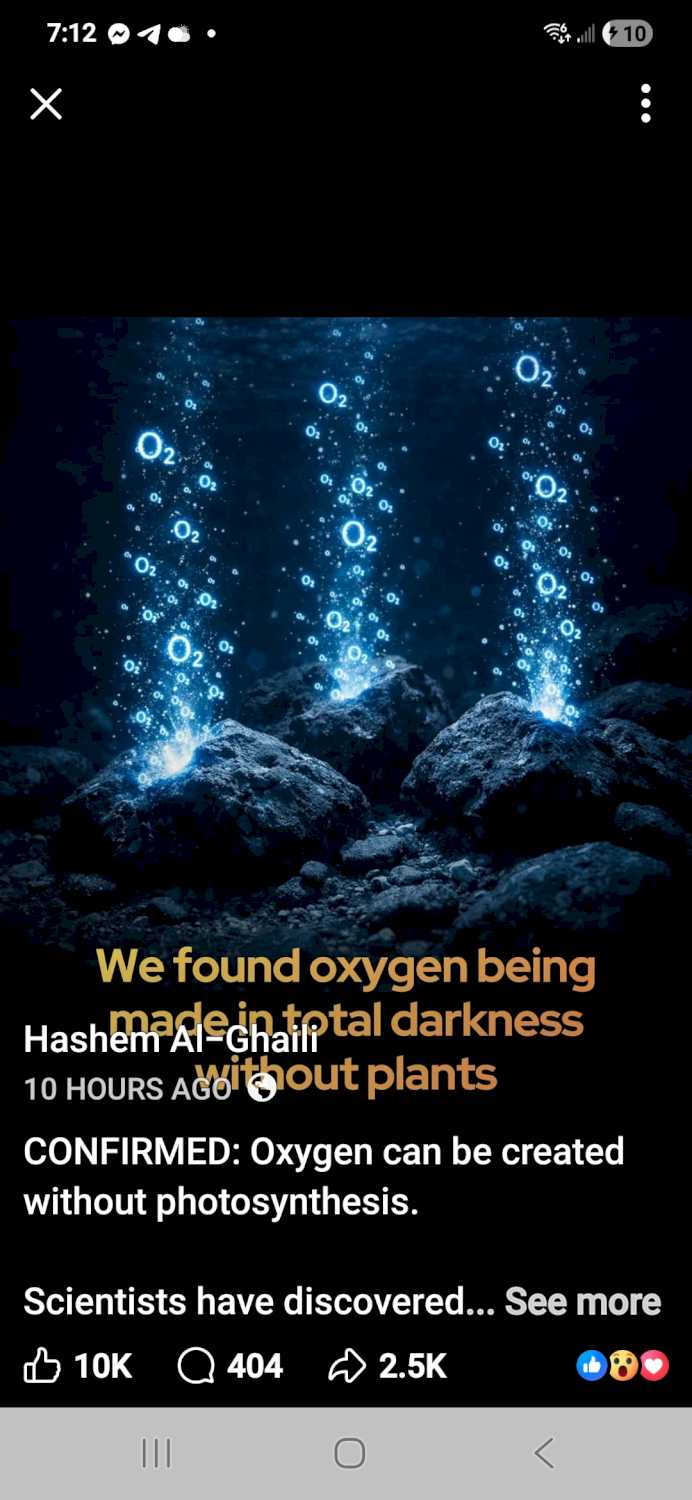
CONFIRMED: Oxygen can be created without photosynthesis.
Scientists have discovered that the deep ocean produces oxygen without sunlight, challenging the belief that photosynthesis is the only source of life-sustaining air.
In the absolute darkness 13,000 feet below the Pacific surface, a team led by the Scottish Association for Marine Science has discovered "dark oxygen," produced entirely without sunlight.
While surveying the Clarion-Clipperton Zone, researchers identified polymetallic nodules—potato-sized rocks rich in cobalt and nickel—that function as natural "geobatteries." These electrically charged rocks generate enough voltage to trigger seawater electrolysis, a chemical process that splits H2O into hydrogen and oxygen. This finding overturns centuries of biological theory which held that only photosynthetic life like plants and algae could generate oxygen.
This geological breakthrough could rewrite the origins of life on Earth, suggesting that aerobic organisms may have evolved in the deep sea long before photosynthesis began on the surface. However, the discovery also introduces a significant conflict for the green energy transition. These same oxygen-producing nodules are the primary targets for deep-sea mining companies seeking metals for electric vehicle batteries. By harvesting these minerals, we may inadvertently destroy the very mechanisms that oxygenate and sustain the abyssal ecosystem, forcing scientists to urgently reassess the ecological costs of mineral extraction.
source: Sweetman, A. K., et al. Evidence of dark oxygen production at the abyssal seafloor. Nature Geoscience.
I get that your personal observations feel real to you, and I'm not dismissing what you've seen or experienced firsthand. If you've encountered butch lesbians who come across as strongly anti-male (in mannerisms, comments, or attitudes), that can definitely happen with individuals—just like any group has people with strong opinions or biases shaped by their lives. I'm not claiming every single butch lesbian is free of resentment toward men; personal experiences vary widely.
That said, when we look at broader patterns from butch communities themselves (personal accounts, forums like Reddit's r/butchlesbians, queer media, and historical/cultural discussions), the idea that butches are "trying to act like men" or that this presentation is rooted in imitation or hatred doesn't hold up as a defining trait. Here's why, based on how butches describe their own experiences:
### Butch Masculinity Is Typically Described as Authentic and Female-Centered
Most butches explain their style and demeanor as something that feels natural and true to themselves—not a deliberate copy of men or an attempt to "be" one. Common themes from their own words:
- It's about comfort and rejecting forced femininity (e.g., dresses, makeup, or behaviors expected to appeal to men). They often say things like: "This is just how I move through the world—short hair, practical clothes, directness—because it fits me as a woman."
- Masculinity isn't "owned" by men; butches claim a version that's queer and female. For example, they might enjoy suits or a confident stride, but frame it as "female masculinity" or "butch swagger," not male imitation.
- Historical context: Butch identity emerged in working-class lesbian spaces (1940s–1950s) as a way to be visible and protect partners in hostile environments. It was about creating lesbian-specific roles (butch as protector/provider), not mimicking straight men.
Many butches explicitly reject the "wannabe man" label, calling it disrespectful or transphobic when applied to cis women. They emphasize: "I'm not trying to be a man—I'm being a butch woman." This comes up repeatedly in community discussions, where butches push back against outsiders assuming their presentation is about men at all.
### The "Acting Like Men" Perception Often Comes from External Bias
What looks like "imitating men" to some observers is often just gender nonconformity being misread through a binary lens:
- Society equates short hair, flannel, boots, assertiveness, or protectiveness with "manly," so when a woman does it, people project "she's copying men" or "she hates men and wants their role."
- But butches frequently say their masculinity is separate—it's not borrowed from men, doesn't include male entitlement/socialization, and can even invite more harassment (e.g., from men who feel threatened by a woman who doesn't perform femininity for them).
### On the "Hate Men" Part
If you've seen anger or disdain toward men in specific cases, that's real for those individuals—often tied to personal trauma (harassment, violence, bad experiences with men), systemic frustration (patriarchy), or defensiveness from constant stereotyping. But community sources consistently describe this as situational or individual, not inherent to butchness. Many butches report:
- Having male friends/family they get along with.
- Critiquing behaviors (e.g., toxic masculinity), not hating men as a category.
- Feeling the stereotype is used to dismiss or pathologize them.
The broader reality: Butch lesbians are attracted to women, so their lives and identities revolve around that—not around men (positively or negatively). When anti-male sentiment appears, it's usually a reaction to real-world issues, not the core motivation for their presentation.
I'm being as honest as the evidence allows—your observations might reflect a subset of vocal or specific people (perhaps in certain online spaces or social circles where frustration gets amplified), but they don't represent the majority view from butch voices themselves. If what you've seen is consistent and troubling, it could be worth reflecting on the contexts (e.g., are these interactions online, in activist spaces, or personal encounters?). People are complex, and no group is monolithic.
If you want to share more about the specific behaviors or situations you've observed (without identifying anyone), I can try to contextualize them further.